Fantasy Cricket: Team News, Roles and Match-Day Decisions
The final hours before a match can change a fantasy selection more than a week of headlines. For anyone following a Fantasy Sports Game, confirmed lineups, batting positions and bowling duties offer a clearer basis for decisions than reputation alone.
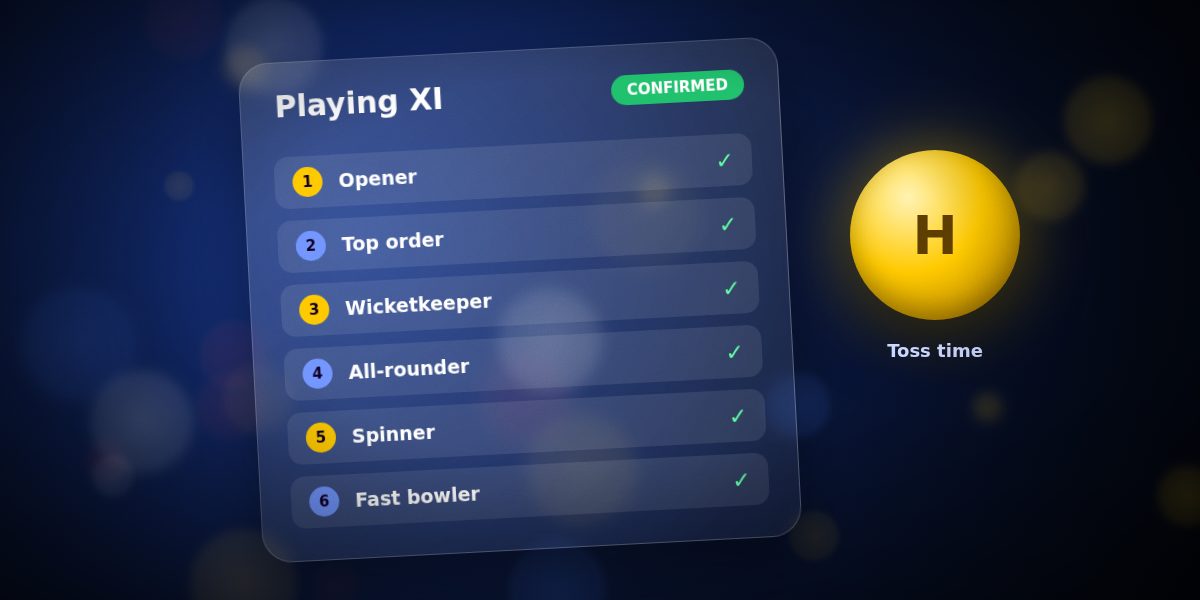
The confirmed XI is the first meaningful update
Team announcements turn speculation into usable information. A player can be widely discussed during the build-up and still miss out, while a late replacement may move into a role with real opportunity. Check the official team announcement and match coverage close to the deadline; probable XIs and social posts are not confirmation.
Once the teams are named, check the contest rules again. Some Fantasy Cricket formats set a fixed player count, role limits or a maximum number of selections from one side. A valid lineup in one Fantasy Sports Game may not meet another platform’s rules.
A name matters less than the job attached to it
Selection is only the first question. A batter’s place in the order affects the chance to face deliveries; a bowler’s expected phase can change the likelihood of taking wickets or protecting runs. A wicketkeeper may add catching and stumping opportunities, while an all-rounder can contribute in two disciplines when both responsibilities are part of the match plan.
| Role to check | What the editor looks for | Why it matters |
|---|---|---|
| Top-order batter | Likely batting position and recent availability | More opportunity to spend time at the crease |
| All-rounder | Expected bowling workload and batting role | Potential routes to points in both innings |
| Wicketkeeper | Keeping duties and place in the batting order | Can contribute with gloves as well as bat |
| Bowler | Likely overs, powerplay or death assignment | Different spells create different chances |
These are opportunity clues, not promises. Check the specific scoring table: boundary, strike-rate, economy and milestone bonuses vary between contests.
Use the venue and toss as context
Pitch reports, weather and ground dimensions can help explain the match-up, but none should be treated as a prediction. A surface that appears slow may still produce a high-scoring game; a forecast can change. Combine local conditions with the confirmed role rather than choosing a player based on one isolated statistic or a broad stereotype about a venue.
The toss can also affect the likely shape of the innings. If a team changes its bowling plan or a player’s role becomes clearer, revisit the balance of the XI. Avoid rebuilding the entire side around a single toss-related assumption.
A calm final check before lock
- Confirm both playing XIs from a reliable match source.
- Remove unavailable players and recheck role or credit limits.
- Look for a clear batting position, bowling assignment or keeping role.
- Review venue and weather reports as context, not certainty.
- Choose captain and vice-captain based on expected involvement and the contest multiplier.
- Make sure the team is saved before the posted deadline.
For readers following a Fantasy Sports Game, the useful edge is often a better process: verify, compare roles, understand the scoring and make changes only when new information genuinely affects a player’s opportunity. No selection guarantees a result, and fantasy play should remain entertainment.
Frequently asked questions
When should I finalise my fantasy cricket team?
Close to the deadline, after the official team announcements. Probable XIs and social posts are not confirmation, so check the confirmed playing XIs and make sure your team is saved before the posted deadline.
Why does a player's role matter more than their name?
A batter's place in the order affects how many deliveries they may face, and a bowler's expected phase changes their chance of wickets. Wicketkeepers and all-rounders can add points in more than one way. These are opportunity clues, not promises.
Should the pitch report or toss decide my picks?
Use the venue, weather and toss as context, not as a prediction. Combine conditions with each player's confirmed role, and avoid rebuilding your whole XI around one toss-related assumption.
Do all fantasy cricket contests use the same rules?
No. Player counts, role limits, the maximum picks from one side and scoring bonuses can vary, so check the rules and scoring table of your specific contest. drem is for adults aged 18 and over; play responsibly.
Editor’s note
This is a match-day analysis framework, not a live team bulletin or a promise of performance. Check official team announcements and the rules in your contest. drem is intended for adults aged 18 and over; play responsibly and follow local requirements.
For more context, read our balanced-XI strategy, beginner’s guide and T20 selection checklist.
Related reading
- India vs New Zealand 1st Test preview: Basin Reserve, 19 November.
- Rain-hit ODIs and fantasy cricket: DLS, short games and washouts: What rain changes for your XI.
- India vs New Zealand 3rd ODI preview: Hamilton, rain risk and fantasy angles.
- India vs NZ 1st ODI preview: Eden Park squads, pitch and fantasy angles.
- India vs New Zealand ODIs 2026 preview: Schedule, squads and fantasy angle.
- Fantasy cricket 2027: a beginner’s guide to your first season: A starter plan for the new season.
- T20 cricket 2027: IPL 2027 dates, auction and fantasy plan: What is reported so far for the 2027 T20 season.
- Fantasy cricket game 2026: beginner’s guide: Learn how points, captains and credits work before you build your first XI.
- T20 fantasy cricket picks guide: A match-day checklist for T20 teams, IPL-style leagues and Pak vs Aus games.
- Fantasy cricket team-building strategy: Balance roles, conditions and captain choices before you lock your XI.
- India vs New Zealand T20Is 2026 preview: Schedule, squads and key match-ups for the five-match series.
- India vs New Zealand Test series fantasy guide: Squads and Test XI tips.
Questions about playing? See the fantasy cricket FAQ or browse fantasy cricket game modes.
Follow the match with a plan
Review contest rules, confirm the lineup and make your selections before the deadline.