What Is a Powerplay in T20 Cricket?
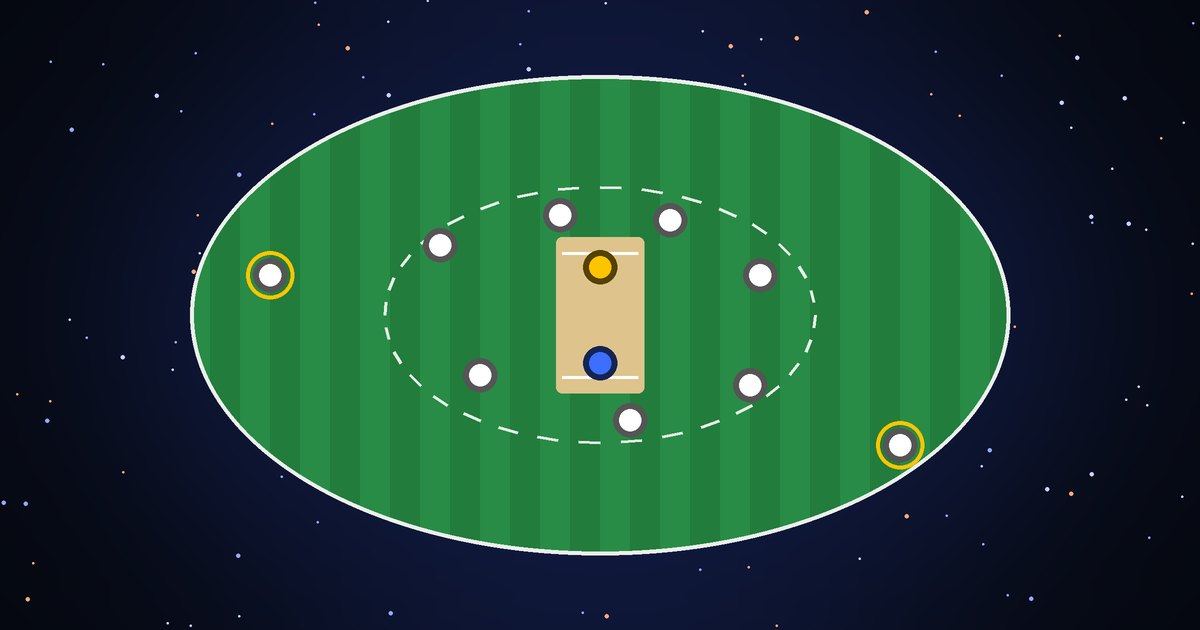
A powerplay in T20 cricket is the first 6 overs of each innings, when the fielding side may keep only 2 fielders outside the 30-yard circle. With 7 fielders close to the pitch, gaps open up in the outfield, so batters attack and bowlers fight to take early wickets.
Last updated 12 November 2026. Rules come from the sources at the end of this page. Leagues can set their own playing conditions, so check the rules of the tournament you are following.
The powerplay is 30% of a 20-over innings, but it often decides the match. A team that reaches 60 for 0 after six overs is in control. A team that slips to 35 for 3 spends the rest of the innings rebuilding.
For fantasy cricket players the powerplay matters even more. Openers, new-ball bowlers and in-form top-order batters collect a large share of their points in these 36 balls. Understand the powerplay and you will pick better teams.
T20 powerplay rules explained
In a full 20-over innings, the powerplay is overs 1 to 6 and it is mandatory. Neither captain can choose when to take it. The same rule applies in T20 internationals, the IPL and most domestic T20 leagues.
| Phase | Overs | Max fielders outside the circle | What usually happens |
|---|---|---|---|
| Powerplay | 1–6 | 2 | Openers attack the gaps; swing and seam bowlers hunt early wickets |
| Middle overs | 7–15 | 5 | Spinners slow the scoring; batters rotate the strike and build |
| Death overs | 16–20 | 5 | Big hitting, yorkers and slower balls |
The 30-yard circle is an oval marked about 27.4 metres (30 yards) from the middle of the pitch. If the fielding side breaks the restriction, the umpire calls a no-ball, which gives the batting side a run and a free hit.
A quick history note: ODI cricket once let captains choose "batting" and "bowling" powerplays. T20 never used that system, so the T20 powerplay is always the first six overs.
Powerplay in rain-shortened T20 matches
Since 10 July 2025, the ICC counts the powerplay in balls, not whole overs, when a men's T20 international is shortened. The aim is to keep the powerplay close to 30% of the innings. Earlier, the length was rounded to the nearest full over, so a 9-over game got 3 powerplay overs, a third of the innings. Fielding restrictions can now end in the middle of an over, and the umpire signals the moment.
| Overs per side | Powerplay (overs.balls) | Overs per side | Powerplay (overs.balls) |
|---|---|---|---|
| 5 | 1.3 | 13 | 3.5 |
| 6 | 1.5 | 14 | 4.1 |
| 7 | 2.1 | 15 | 4.3 |
| 8 | 2.2 | 16 | 4.5 |
| 9 | 2.4 | 17 | 5.1 |
| 10 | 3 | 18 | 5.2 |
| 11 | 3.2 | 19 | 5.4 |
| 12 | 3.4 | 20 | 6 |
Leagues such as the IPL set their own playing conditions, so check the tournament rules for rain games. For more on weather and fantasy picks, read our guide to rain-hit matches and DLS.
Powerplay strategy: batting vs bowling
The batting side wants fast runs without losing wickets. The bowling side wants wickets, because each early wicket slows the scoring for the next 14 overs.
Batting side
- Hit over the infield. With only 2 fielders out, lofted drives and shots over cover or mid-wicket often find empty grass.
- Use the pace of the ball. Many openers play the new ball late and run it down to third man or fine leg.
- Send a pinch-hitter. Some teams move an aggressive batter up the order to exploit the field.
- Protect wickets. A fast start loses value if the top three are out by the end of over 6.
Bowling side
- Swing it early. The new white ball moves most in the first 2–3 overs, so seamers attack the stumps.
- Try spin up front. A spinner in overs 2–4 can surprise batters who are set for pace.
- Place the two boundary riders well. Captains put them where the batter scores most.
- Hit hard lengths. Back-of-a-length balls into the pitch are harder to loft than full deliveries.
How to use the powerplay in your fantasy cricket game
In a fantasy cricket game you score points from what real players do on the field. Because the powerplay is where openers and new-ball bowlers do most of their work, it should shape your team.
- Back aggressive openers. Openers face the most balls in the powerplay. Pick those with high strike rates against the new ball, and consider one as captain.
- Choose powerplay wicket-takers. Bowlers who open the attack get first use of the new ball and bowl to batters who are taking risks. Check how many powerplay wickets they took in recent matches.
- Read the pitch and the toss. A green pitch or evening dew changes how much the new ball swings. Wait for the toss before you lock your team.
- Watch the forecast. In a shortened match the powerplay is shorter too, so top-order batters get fewer overs against an open field. Lean towards hard-hitting all-rounders.
- Balance your captain picks. A powerplay specialist bats or bowls early, so a captain who fails in the first six overs can sink your score. Spread the risk across your captain and vice-captain.
New to the game? Start with our fantasy cricket beginner's guide and the T20 fantasy cricket picks guide, then build your XI on drem. The game is free, for adults aged 18 and over. Play responsibly.
Frequently asked questions
How many overs is the powerplay in T20 cricket?
Six overs per innings in a full 20-over match. In a shortened men's T20 international, the ICC sets it at about 30% of the innings, counted to the ball.
How many fielders can be outside the circle in the powerplay?
Two. After the powerplay, up to five fielders may stand outside the 30-yard circle.
Is the powerplay the same in the IPL?
Yes. In a full IPL match, overs 1 to 6 are the powerplay, with the same limit of two fielders outside the circle. Check the tournament playing conditions for rain-shortened games.
Can a team choose when to take the powerplay in T20?
No. The T20 powerplay is fixed at the start of each innings. Neither captain can move it.
What is a good powerplay score in T20?
It depends on the pitch, but 50 to 60 runs for the loss of no more than one wicket is usually a strong start.
Why does the powerplay matter in fantasy cricket?
Openers and new-ball bowlers earn many of their runs and wickets in these six overs, so they are often strong captain and vice-captain choices.
Sources
- ICC amends powerplay calculation in shortened T20Is (Cricket Times, 2025)
- New ICC rule adjusts powerplay for shortened T20I matches (ProPakistani, 27 June 2025)
- ICC revamps rules for T20Is (The Express Tribune, 2025)
Related reading
- ILT20 Season 5 fantasy preview: Schedule, teams and a T20 checklist.
- T20 fantasy cricket picks guide: How to pick a balanced T20 XI.
- Fantasy cricket team-building strategy: Credits, roles and captain choices.
- Rain-hit matches and fantasy cricket: DLS, short games and washouts.
- Fantasy cricket login help: Get back into your account.
Pick your powerplay stars
Play fantasy cricket free on drem. 18+ only. Play responsibly.